
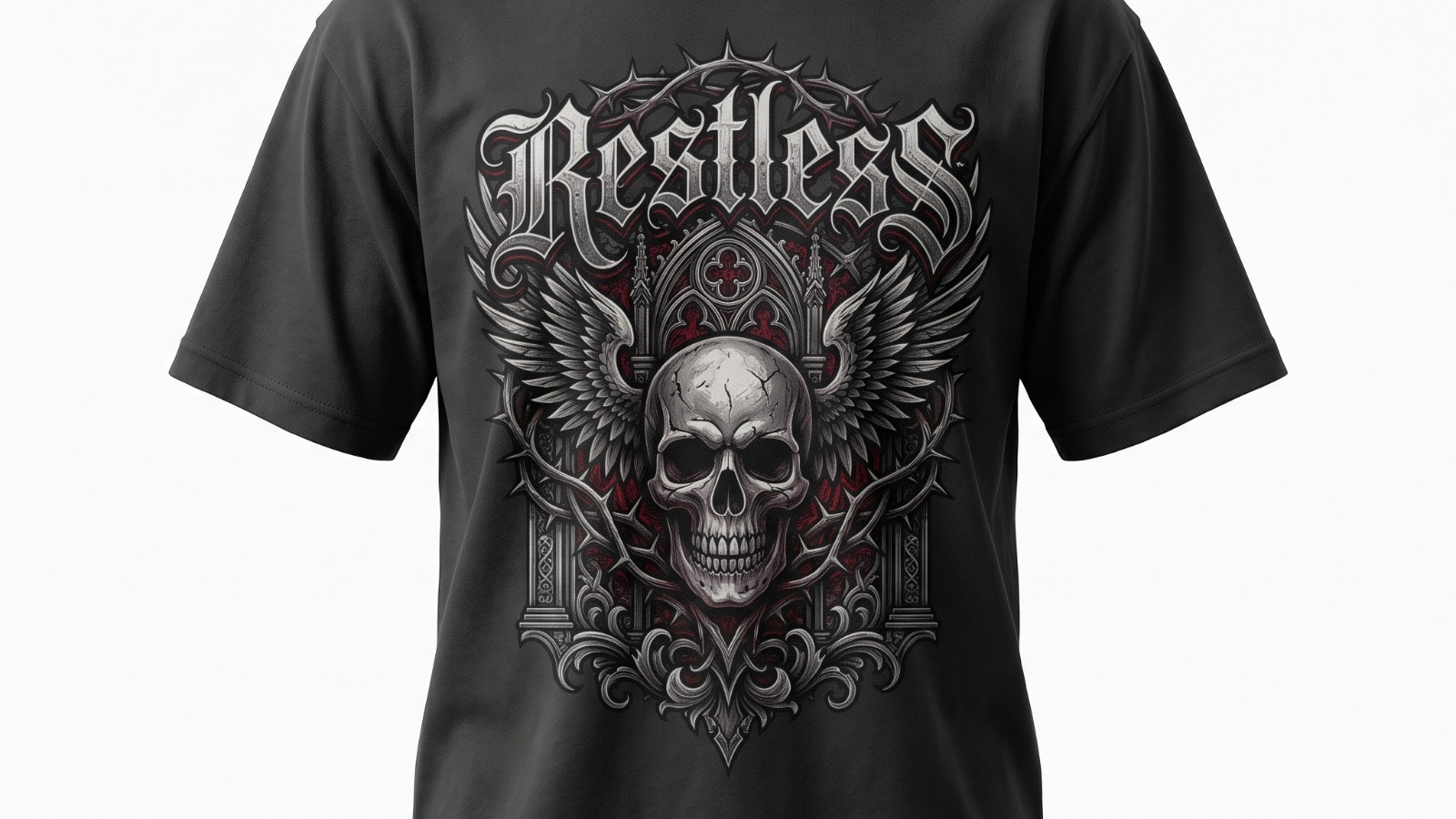
A heavyweight t-shirt is a tee made from thick cotton jersey, usually around 220 to 300 GSM, compared with roughly 140–180 GSM for a standard tee. The extra weight gives a structured drape, a more premium hand feel and better durability, which is why heavyweight tees are a core product for streetwear brands.
This guide explains GSM, fabric, fits and finishes so you can specify a heavyweight t-shirt your customers will notice.
T-shirt weight classes
| Weight class | Approx. GSM | Feel and use |
|---|---|---|
| Lightweight | Under 160 | Thin, soft, promotional and summer tees |
| Midweight | 160–200 | Everyday tees, good for prints |
| Heavyweight | 220–260 | Structured, premium, popular for streetwear |
| Extra heavyweight | 260–300+ | Very thick, boxy drape, luxury basics |
Exact boundaries vary by brand and mill, so always specify the GSM number rather than just “heavyweight”.
Why streetwear brands choose heavyweight tees
- Structure. Thick jersey holds oversized and boxy shapes instead of clinging.
- Premium feel. Customers associate weight with quality and accept a higher retail price.
- Durability. Collars and hems keep their shape longer after washing.
- Better print base. Large screen prints and puff prints sit well on dense fabric.
Fabric: what to specify
Most heavyweight tees use 100% cotton single jersey. Ask your manufacturer about yarn quality and whether the fabric is pre-shrunk or compacted, because heavy cotton can shrink if it is not treated. A heavier rib collar (often 1×1 rib) and a twin-needle hem complete the premium look.
Fit: oversized, boxy or drop shoulder?
Weight and fit work together. An oversized t-shirt uses a wider body and dropped shoulders; a boxy fit t-shirt is wide and shorter; a drop shoulder tee moves the shoulder seam down the arm for a relaxed look. All three look best in heavier jersey.
Finishes and decoration
Heavyweight tees take washes well. A vintage wash t-shirt gets a faded, broken-in feel, and acid wash or distressing adds texture. For decoration, compare methods in screen printing vs DTG vs embroidery; puff print and screen print are especially popular on heavy jersey.
How to spec a heavyweight t-shirt for production
- State the GSM, for example 240 or 280 GSM, and 100% cotton jersey.
- Choose the fit and give a size chart with body length, chest width and sleeve length.
- Specify the collar rib width and hem finish.
- List decoration size, placement and method.
- Add labels and packaging. Put it all in a tech pack.
Garant Impex manufactures custom heavyweight t-shirts in 220–300 GSM cotton jersey from 25 pieces per design, with samples in 2 weeks. Explore all custom t-shirt styles.
Garant Impex · Sialkot, Pakistan
Ready to make your custom streetwear?
Custom hoodies, t-shirts, tracksuits and jackets from 25 pieces per design. Samples in 2 weeks, bulk in 3–4 weeks, DDP or DAP shipping worldwide.
Frequently asked questions
What GSM is a heavyweight t-shirt?
A heavyweight t-shirt is usually made from about 220 to 300 GSM cotton jersey. Standard tees are roughly 140–180 GSM.
Is 240 GSM a heavyweight t-shirt?
Yes. 240 GSM sits in the heavyweight range and is a popular weight for streetwear tees.
Do heavyweight t-shirts shrink?
Heavy cotton can shrink if untreated. Ask your manufacturer for pre-shrunk or compacted fabric and check the sample after washing.
Are heavyweight t-shirts good for printing?
Yes. Dense jersey gives a stable base for screen print and puff print, and holds large graphics well.
What is the MOQ for custom heavyweight t-shirts at Garant Impex?
The minimum order is 25 pieces per design.